Medical Interns in J&K Launch 48-Hour Hunger Strike for Stipend
Medical interns across Jammu and Kashmir began a 48-hour hunger strike on Monday, demanding an increase in their monthly stipend after failed negotiations with the state government.
 Janta Ki Adalat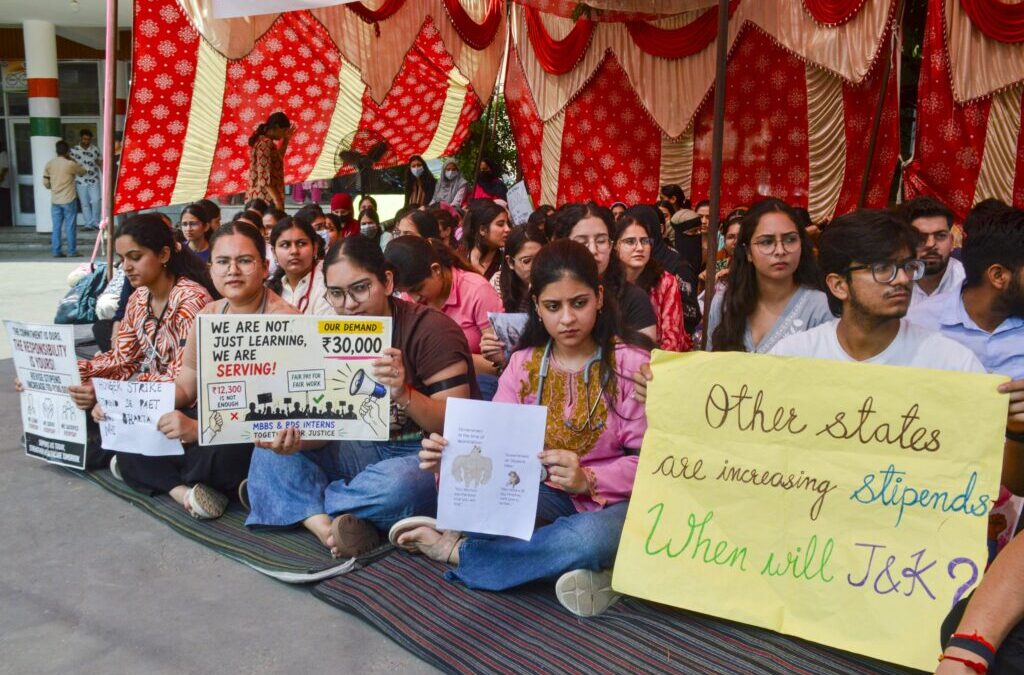
Medical interns from 10 government medical colleges and two dental colleges in Jammu and Kashmir commenced a 48-hour hunger strike on Monday. This action follows unsuccessful negotiations with the state government aimed at resolving their ongoing demands for an increased monthly stipend. These interns continue a seven-day strike, drawing attention to their plight as they insist on fair compensation for their work.
Dr. Faraz, a participating intern, expressed his frustrations, stating, “Our strike is indefinite. It will not stop until we receive an official order.” He emphasized that more than a week has elapsed since they initiated the strike, illustrating that their patience has worn thin. “If the government takes an issue seriously, it doesn’t take this long to issue an order,” he added, highlighting a broader sentiment shared among the protesting interns.
Interns voiced their concerns about the slow response from the government. “We have already given them three years,” Dr. Faraz reiterated. His statement reflects the interns’ deep-seated frustration with the lack of progress. The recommendation for a stipend increase was initially proposed in 2023, yet the lack of action leaves many questioning the government’s priorities.
As the hunger strike unfolds, Dr. Faraz details the interns’ resolve: “We are compelled to sit on a hunger strike to create sustained pressure on the government.” He clarified that participation in the hunger strike is voluntary, with two to three students from each college choosing to make a stand. This collective action signifies a concerted effort to foster meaningful dialogue and push for their legitimate rights.
Interns have criticized the government for offering prolonged verbal assurances without concrete follow-up. “Eight days have passed, and there is still no order,” Dr. Faraz stated. He argues that the repeated promises of future consideration are increasingly viewed with skepticism.
Amid the escalating tensions, some collective intimidation has reportedly emerged from college administrations attempting to suppress dissent among the interns. “It is unacceptable. We are protesting for our legitimate rights,” Dr. Faraz asserted. His remarks resonate widely, signaling that threats will not deter interns from their cause. The students display strength and unity, ready to confront intimidation tactics with determination.
Dr. Musharaf, another intern on the frontline, conveyed a slightly more diplomatic tone, acknowledging that discussions with the government have seen progress. “There have been some positive developments, but no solution has been reached yet,” he said, suggesting an opportunity for continued negotiation.
Moving forward, the interns plan to maintain pressure on the government, with Dr. Musharaf stating, “Our subsequent dialogue will continue moving forward, so we will not say that it has entirely failed.” The hunger strike symbolizes their commitment to advocating for better conditions and stipends, setting the stage for future actions depending on governmental response.
This hunger strike highlights the ongoing struggle for fair compensation within the medical community in Jammu and Kashmir. As they undertake this severe measure, the interns hope their actions will prompt the government to heed their demands, ultimately leading to a resolution that addresses their concerns effectively.